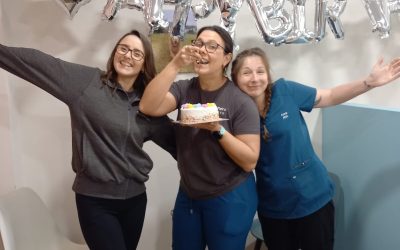
Please don’t actually come at 2.30. We run 20-minute appointments, not the industry standard 10 or 15 mins. So the closest we can do is 2.20 or 2.40. Besides which, we are all about the NON painful teeth.
But lets talk teeth… All pulp, no fiction.
So, first let’s bust the myths…
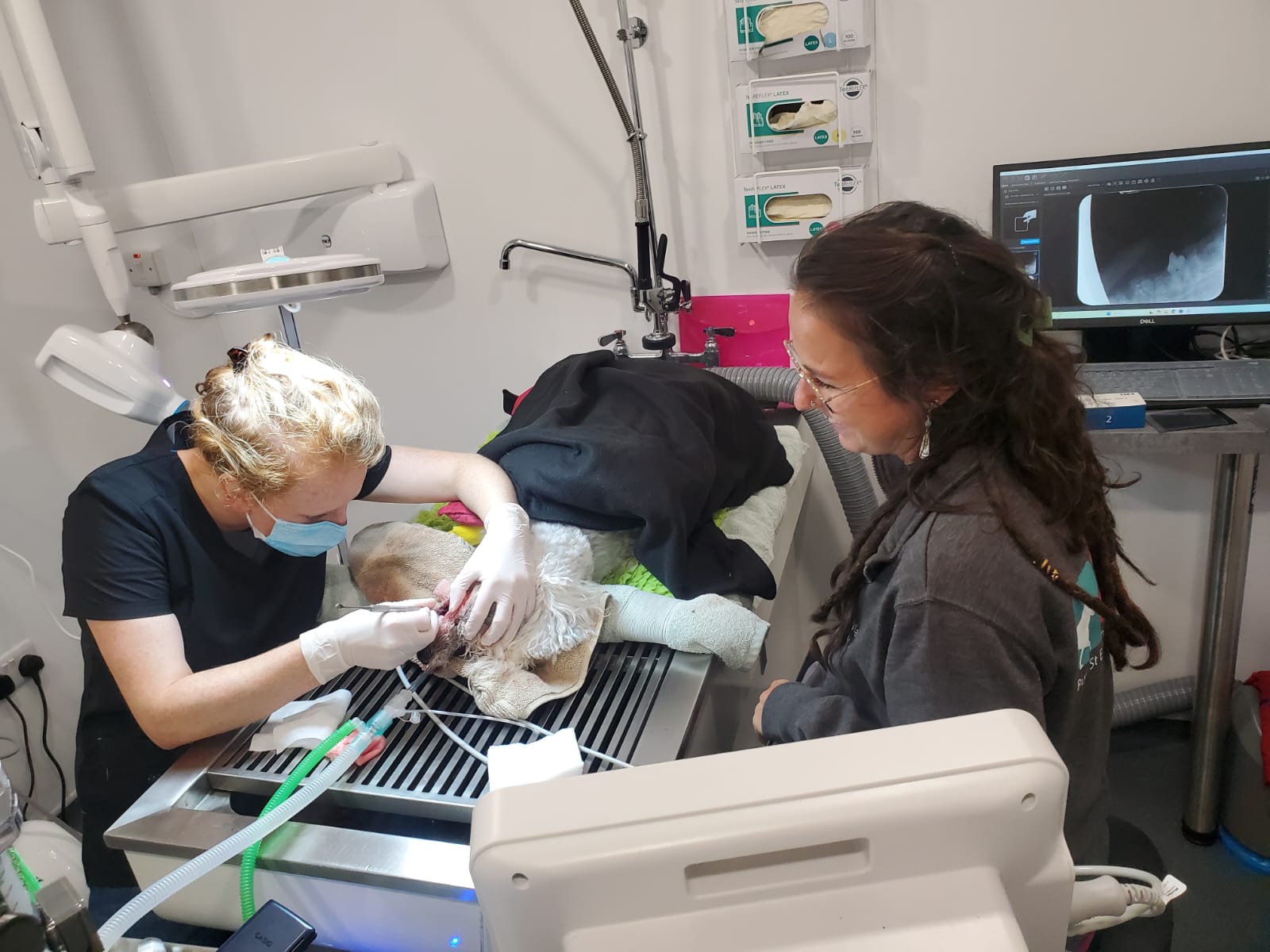
- “Dogs and cats don’t feel dental pain” = WRONG. They totally do. They actually have more dentine tubules than us, so probably have more sensitive teeth. They just don’t show it in the same way. They don’t hold their face and make cold soothing drinks and soups. But also, we don’t greet people in the same way as dog’s do. I personally much prefer a friendly “hi” over a butt sniff, so I’m kinda glad we do things differently. But I promise you, when we have animals asleep and we poke a painful tooth, we see it on the multiparameter monitor. Heart rate shoots up. Breathing rate shoots up. They FEEL their teeth. They just can’t tell you.
- “It can’t be bad; Fido hasn’t stopped eating” = WRONG. Dogs and cats are hardwired to keep eating through sadly immense dental pain. In fact, if an animal comes in not eating, we must always rule out other causes first, because it is so rarely their teeth! We frequently have animals with jaw fractures that are still trying to eat before we fix them! It is a hardwired for them to eat through even the worst kind of pain. They FEEL it. They just don’t SHOW it.
Now we have that out of the way, let’s get down to business…
Why is dental health important for cats and dogs…? Brace yourself.
It is the most common health condition in dogs over the age of 4! And impacts overall health and quality of life to a huge extent! It starts as tiny bits of bacteria on the teeth; they snowball and form plaque. This snowballs even further to calculus and before you know it, the gums next door are getting pretty irritated with their new neighbour, get angry and inflamed and cause gingivitis. Much like any angry situation, it only makes things worse. The inflammation leaves more area for even more bacteria to join the party and before you know it you have a full periodontitis rave. Eating bone. Not clearing up after itself. And causing absolute havoc in the mouth.
It isn’t a party your dog wants an invite too. We know it affects their comfort, behaviour, liver and kidney health and a whole host of other problems later down the line. Much like everything in life prevention is better than cure. But we will get to that later.
Early signs of pet dental disease to look for… I have a ‘filling’ these will be a bit
vague…
So, sometimes there is no signs at all! We often pick up dental disease on routine health checks and 6 monthly checks; it is why these are so important. But, if you are really watching, and your dog is really sensitive, sometimes you can see the very early signs.
These include (but not limited to, and I repeat, some dogs will show NONE!):
- Bad breath that seems stronger or more unpleasant than usual
- Yellow or brown tartar build-up on the teeth
- Red, swollen, or bleeding gums
- Dropping food while eating
- Chewing on one side of the mouth
- Taking longer to eat than normal
- Reluctance to chew toys or harder treats
- Pawing at the mouth or rubbing the face
- Dribbling more than usual
- Changes in appetite
- Reduced grooming, especially in cats
- Seeming quieter, grumpier, or less like themselves
The golden rule here is…
“a bad mood is like bad breath…. Both are wrong to inflict on others”
If there is an odour, there is an issue! “DOGGY BREATH” IS NOT A NORMAL FINDING!
So, if you are in the car and think “wow, I need to open the window because I can smell Fluffy’s breath”, Fluffy needs to come in for a free dental check. It isn’t cute. It isn’t normal. Fluffy is probably sore but can’t tell you because she can’t speak to say “ouch!”.
 Signs that need prompt veterinary attention – the tooth, the whole tooth and
nothing but the tooth.
Some things need to be seen sooner rather than later. Such as…
- Loose teeth
- Broken or damaged teeth
- Blood in the saliva
- Swelling around the mouth, face, or jaw
- Obvious pain when eating or when the mouth is touched
- Sudden difficulty eating or refusing food
Problems in the mouth don’t improve on their own. Left untreated, dental disease can become more painful and more difficult to manage. It eats away at the bone around them and early treatment means less invasive surgery and less pain for your cat or dog.
The Difference Early Treatment Can Make – What is the dentist’s favourite
animal…? The Molar Bear.
“Muffin is like a puppy again”
“It has turned the clock back 5 years for Padfoot”
Owners are often surprised by how much better their pet seems after dental treatment. Many pets become brighter, happier and more comfortable once painful teeth, sore gums and tartar build-up have been addressed.
Animals are incredibly good at adapting to discomfort, so the extent of the problem is often only clear once they are feeling better again. Catching dental issues early can mean less pain for your pet and, in some cases, simpler treatment.
If needed, your pet may benefit from a professional dental procedure at the practice to remove tartar build-up and clean the teeth properly, helping to restore comfort and protect long-term oral health. Giving them a “Colgate smile” once more (please never use Colgate on your dog or cat, and not to be brand specific, please don’t use ANY human toothpaste on them. We can’t tell them to spit so the fluoride is bad! But you get the mental image of a “Colgate smile” on your pets face).
Even if your pet is older, dental care is still really important – arguably more so! And please try not to fret, modern anaesthetics are very safe, we are exceedingly experienced and used to performing dental treatments on both cats and dogs up to 20 years old! Age is just a number and there are loads of things we do to make our anaesthetics super safe, please just ask if you are worried and we can go through everything with you!
Essentially, however, the risks of untreated dental disease often outweigh the risks of a procedure. That is why regular dental checks are so important; they allow problems to be picked up early and treated before they become more serious, more painful, and riskier.
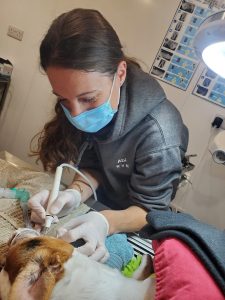
Dental health checks At Needham Market Veterinary Centre… We are rooting for
you!
We are here to support your pet’s health at every stage of life, from the “brand new fresh-out-of-the-box” puppy smell time, to the most senior of senior citizens, and that includes dental care.
If you have noticed any of the signs above, or you simply want reassurance that your pet’s mouth is healthy, our team can help.
Our veterinary nurse clinics include free dental checks, giving owners the opportunity to have early concerns assessed and to get practical advice on ongoing dental care. To keep your pet plaque-tically perfect.
If further investigation is needed, we can also arrange a veterinary consultation to assess your pet more fully and discuss the best next steps. Because we take a personal, unhurried approach to care, we make sure there is time to listen to your concerns and tailor advice once we have got to know your pet as an individual.
We know that every dog and cat is different, and so is every dental care plan. Every cat or dog, ferret or bunny (or anything else!) that is under our care gets bespoke and tailored care.
Supporting pet dental health at home… I’m running out of tooth puns now…
Home care also has an important role to play. It is the best prevention in our arsenal to fight off dental disease. We can guide you through your best options, even if you are trying to keep your little velociraptor’s teeth clean!
Tooth brushing (if possible) or dental products recommended by your vet can help reduce plaque build-up and support better oral health.
The most effective approach is a combination of good home care and professional guidance. It is always better if we’re together, like Jack Johnson.
When to book a dental check… The velociraptor reference made me think of
another one… What is a dentist’s favourite dinosaur… A Floss-i-raptor!
Probably every 6 months! But don’t delay if your dog or cat has bad breath, visible tartar, red gums, or any change in eating or behaviour. Even mild signs can point to early disease, and acting sooner can make a real difference.
At Needham Market Veterinary Centre, we know pets are family. Looking after their teeth is an important part of looking after their overall health, comfort, and quality of life. If you are concerned about your pet’s dental health, our team is here to help. If you are not sure where to start, just give us a ring or contact us using our online form and we can get you booked in for a free check
with the nurse. We can advise on the options that are realistic and suitable for your pet.
You CAN do this! And your pet will absolutely thank you for it