Getting older happens to the best of us. As the silver highlights start to appear and your pet trades their chaotic youth for a peaceful, daytime-sleeping routine, you might notice their physique changing. Sometimes, those once-chunky pups transform into slender seniors. Other times, the opposite happens, and they start looking suspiciously like a furry table.
Let’s be honest: for many of us, managing our pet’s weight has been a lifelong battle. Our pets are master manipulators. They have fully trained us to hand over treats on demand and have completely perfected the “I am starving and unloved” puppy-dog eyes.
So, if after 13 years of trying, you suddenly find your pet is effortlessly shedding the pounds, it feels like a major victory. But don’t pop the champagne just yet. There might be trouble afoot. A sudden shift in an older pet’s weight is a common concern, and it is something we should never ignore. But you already know that, which is exactly why you landed here. Welcome! Let’s dive into some of the reasons why.
What Exactly Is “Sudden” Weight Change?
In a perfect world, every pet would maintain a flawless, stable waistline throughout their entire life. In reality, pets age, metabolisms shift, and weight changes over the years for a variety of reasons.
What gets our vet senses tingling is a relatively sudden change in weight. We are generally talking about noticeable changes over weeks or months, rather than years. Unless you have recently put them on a strict new diet regime, a sudden shift is an issue that needs checking out.
The Mystery of the Shrinking Senior: Sudden Weight Loss
What causes a senior pet to suddenly drop weight? Honestly, explaining every single possibility would take multiple textbooks and several years of your life. Luckily, we went to vet school so you don’t have to.
In a nutshell, unexpected weight loss usually falls into two categories:
1. They’ve lost their appetite
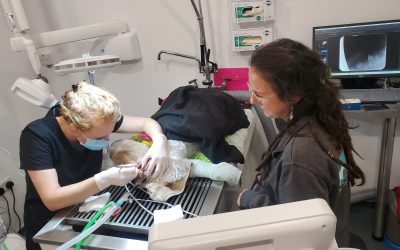
They might be feeling nauseous due to a dodgy tummy, or dealing with the metabolic consequences of an issue like liver or kidney disease. Alternatively, they could be in pain. Dental disease is a huge culprit here. Keep in mind that dogs and cats are incredibly stoic; they can often have quite severe dental pain but will still power through and eat their dinner anyway, as explained here LINK.
2. They’re eating normally (or extra!), but still losing weight
This means your pet’s internal engine is suddenly burning through fuel at lightning speed or can’t absorb or use it in the first place.
Common culprits include:
· An overactive thyroid. This is common in senior cats. Hyperthyroidism turns their metabolism up to 110%. It is essentially like your cat is running a marathon every single day, and they just cannot eat enough to keep up.
· Diabetes. Diabetic pets lose the ability to use the calories they are eating so despite eating lots, their cells are effectively starving.
· Cancer or chronic illness. These uninvited guests place a heavy, constant energy demand on the body and may also affect the way nutrients are absorbed or metabolised.
· Digestive issues. Sometimes the gut can’t absorb nutrients properly.
The Expansion Pack: Weight Gain in Older Pets
While it rarely happens overnight, our golden oldies can also be prone to piling on the pounds.
Here is why the scale might be tipping upwards:
· Lifestyle changes: The normal couch-potato decline. As pets age, their energy needs may naturally drop – this is particularly true in dogs. Highly active, calorie-burning muscle is gradually replaced by much lazier fat tissue.
· Reduced mobility: The slowing down phase. A drop in activity levels means they aren’t burning off their dinners like they used to. Careful not to assume that “slowing down” is always normal though. While it is true that older pets tend to be less active, this may be because they are struggling with their mobility due to osteoarthritis, or other health problems that we can absolutely do something about.
· Hormonal conditions. Less commonly, dogs can develop an underactive thyroid, which puts their metabolism into slow motion or Cushing’s disease, which can make them extra hungry and thirsty.
· Fluid retention. Occasionally, a sudden increase in weight isn’t fat at all, but fluid buildup. If this is happening, you might notice your pet’s belly looking a bit bloated, or they might be puffing and panting more than usual.
What to Do at Home
Cuddle your pets daily – tough I know! Keep a close eye on their shape. If you notice them looking different, or if you find you are having to drastically alter their food portions just to keep them at a steady weight, it is time to let us know. This applies even if they are acting completely normal otherwise.
Of course, weight changes often bring friends. Keep an eye out for an unquenchable thirst, changes in their energy levels, upset stomachs or other signs, all of which are excellent reasons to book a vet visit.
For pets who currently seem absolutely fine, we highly recommend an annual health check with a vet. To stay ahead of the game, you can also make the most of our six-month senior health checks with one of our brilliant veterinary nurses.
Our appointments are a minimum of 20 minutes long, giving us heaps of time to chat through your concerns and look for any subtle changes in their weight or muscle condition before they become a bigger issue.
The Good News
A sudden weight change doesn’t automatically mean the worst-case scenario, but it does mean your pet’s body is trying to tell us something. Weight changes are often the very first early warning sign of a treatable health problem. Don’t be shy! If your pet’s weight is fluctuating, contact us to book an appointment. We are here to help keep your golden oldie feeling golden.